These Are Five Queer Riots & Raids You Should Know About
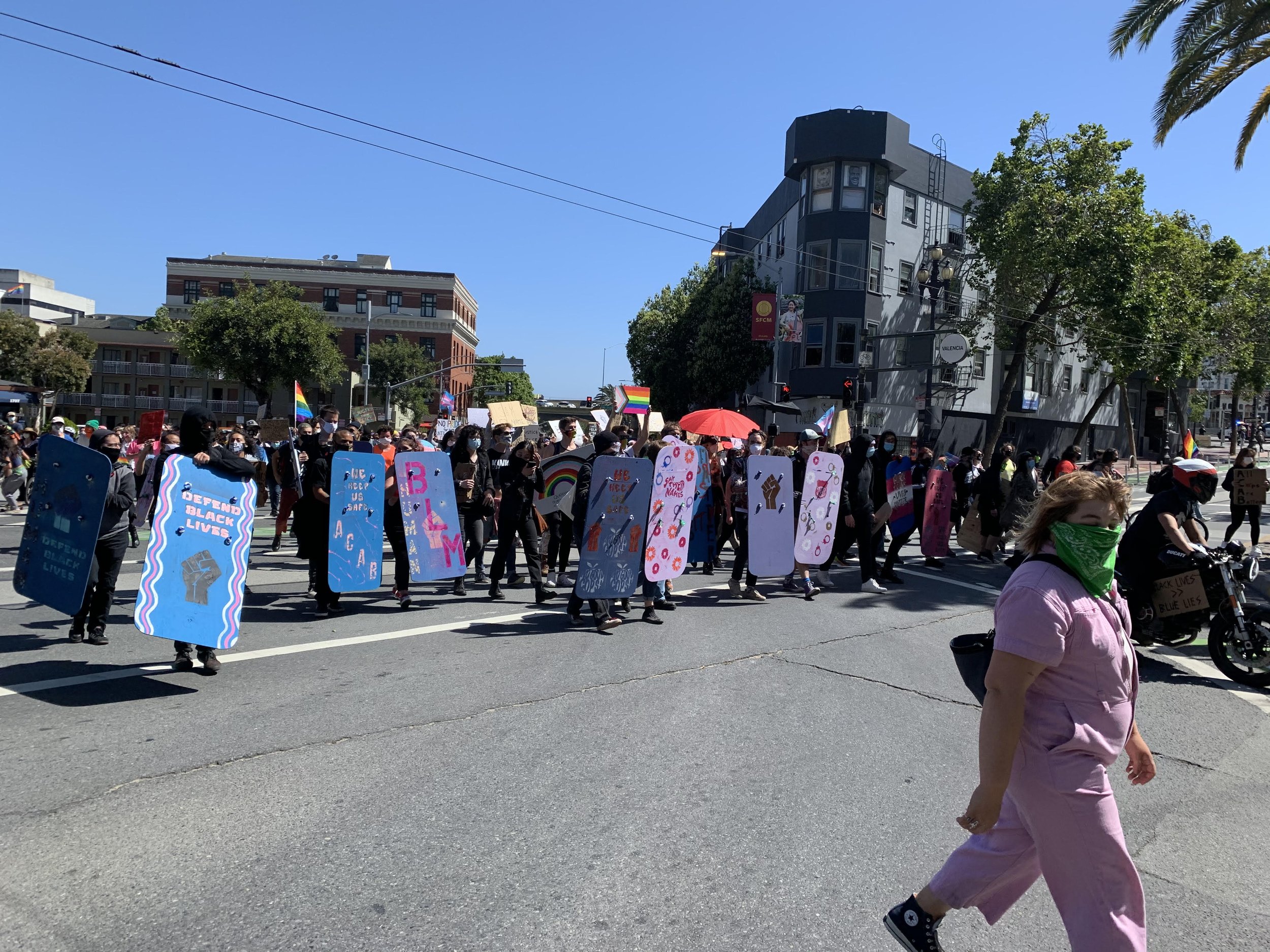
June 28, 2020: fifty years to the day of the “first” Pride march. Mere moments before, the police descended on us with batons and tear gas, attempting to break up our Pride X Black Lives Matter solidarity contingent on Valencia St. I may write about it someday.
Many Americans are familiar with the Stonewall riots of 1969 that took place at the Stonewall Inn & Tavern in Greenwich Village New York. The story goes that the gays rioted, the following year was the first Pride parade, and then everyone lived happily ever after!
Absolutely TF Not!
The truth is, Pride was a series of riots largely led by transgender women of color to protest police brutality.
And while it can be argued that what took place at Stonewall and what resulted had to happen in a major city like the Big Apple, it can also be argued that perhaps Stonewall would not have had the success it did if not for many other riots, raids, and uprisings happening in other parts of the country.
By the way, do you know why they (the queers) were gathered at Stonewall on that particular evening? Keep reading to find out.
California Queer Adventures, by The Native Experience, is committed to fighting the erasure of LGBTQ+ history.
1. White Night Riots (May 21, 1979)
When Harvey Milk (one of the first openly gay elected officials in North America) was assassinated by a fellow member of the San Francisco Board of Supervisors (Dan White), the gay community was furious that White’s charges were reduced to involuntary manslaughter and he was sentenced to less than a decade in prison. To add insult to injury, the decision was announced the day before Harvey’s birthday; had his birthday been on a weekday, I’m sure the powers that be would not have had any problem announcing it on that day instead. Before I go any further, it is worth mentioning that Dan White also murdered the San Francisco Mayor at the time, George Moscone, a very straight man. How on earth do you kill the sitting Mayor of a major city and serve less than 10 years in prison?! Homophobia affects EVERYONE! It certainly helped that it was an all white, all male, largely Roman Catholic jury but what really helped Dan White get off was the infamous Twinkie Defense (look it up).
So understandably the gay community in San Francisco was enraged. A crowd formed at what is now known as Harvey Milk Plaza (I have had the honor of speaking to three people who were physically present that day) and eventually the resulting mob of furious gay men (and quite a few lesbian women as well) made their way to City Hall where they bashed in windows, lit a newspaper stand and police car on fire, and knocked over a telephone pole. Dianne Feinstein, the newly appointed Mayor of San Francisco, gathered the police department and gave them very specific instructions to not lay a finger on any of the rioting gay men.
So those incredibly brave, courageous individuals decided to wait three hours, tape over their badges, and descend on the corner of 18th and Castro, the location of Elephant Walk bar. The police officers brutalized every gay man they could get their hands on, bashing in all the windows up and down Castro Street.
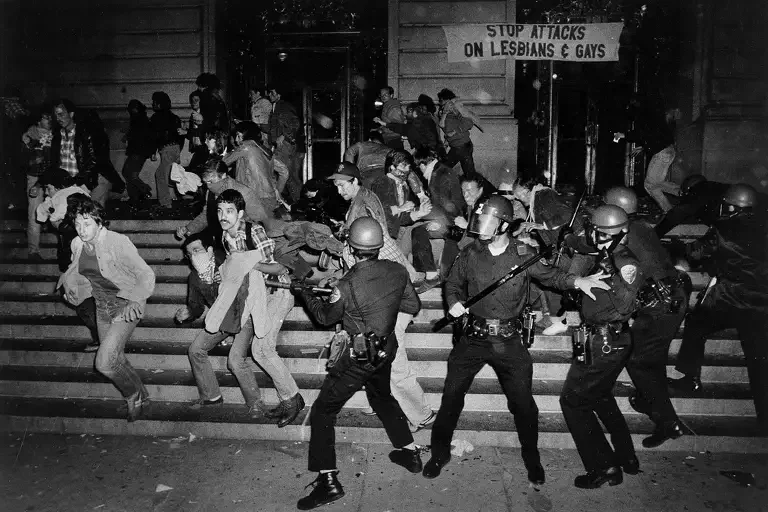
The scene at the front steps of City Hall- hours before the police descended on the Castro for a retaliatory raid centered at Elephant Walk, 18th & Castro Sts
The following morning, the gay community was strategically gathered at Civic Center (next to City Hall) as the Castro was not the safest place to be congregated and the media would be more likely to capture any additional police raids.
The gay community unanimously decided that they didn’t have a single thing to be sorry for, despite the press wanting just one gay person willing to come on camera and offer an apology.
Results: Given that much of what sparked the assassinations was economic in nature, members of the San Francisco Board of Supervisors received a pay raise. Due to a promise that Dianne Feinstein had made to the gay community prior to what became known as the White Night Riots, in the aftermath, gay men were welcomed onto the police force for the first time, a policy that spread nationwide.
And ever since Harvey’s assassination, every single Supervisor who has represented the Castro District has been a gay man. They’ve all been white gay men but I have faith I will see a lesbian of color representing the Castro District in my lifetime.
2. Compton’s Cafeteria Riot (August 1966)
Compton’s Cafeteria was a four location chain in San Francisco, CA. The location at Turk St and Taylor St, being open 24 hours in the Tenderloin District, was one of the only places that tolerated queer folks, including drag queens, sex workers, unhoused folks and activists. On a particularly balmy evening in August 1966 (many sources say it was the 26th but there is a bit of discrepancy) police raided Compton’s and tried to arrest a sex worker. She threw her cup of coffee in the police officer’s face and all hell broke loose. Sugar shakers went flying, plates broke, windows were knocked out, and shattered glass spread everywhere. The police raid was nothing new, but apparently that particular evening, the sex workers, unhoused folks, drag queens and other people who congregated at Compton’s decided to pick up their purses and heels and fight back.
Probably because they knew they had nothing to lose!
Identification checks were a very common tactic the police used to harass LGBTQ+ folks. The anti-masquerading laws in place at the time made it illegal to wear clothes that didn’t match your biological sex; the anti-morality laws made it impossible for those charged under the anti-masquerading and similar laws to enter certain professions.
Executive Order 10450, which was signed into law by President Eisenhower in 1953, categorized queer folks as security risks and banned them from federal employment. This executive order and the resulting Lavender Scare, categorized homosexuality as being a phenomenon similar to addiction and mental illness (neither of which should be stigmatized either!) and resulted in the firing or resignation of thousands of federal employees. Executive Order 10450 wasn’t repealed until President Obama signed EO 13764, six decades later!
In a system and society built by chattel slavery and prison labor, it would be quite foolish to conflate morality with lawfulness; “legal” for poor people and “legal” for rich people are two quite different things.
To learn more about the Compton’s Cafeteria Riot, I would highly recommend the immersive play organized by the Tenderloin Museum. You can find more info about the production here.
The former site of Compton’s Cafeteria, 111 Taylor St (near the intersection with Turk Street) is now the heart of the Transgender District, one of San Francisco’s defined cultural districts.
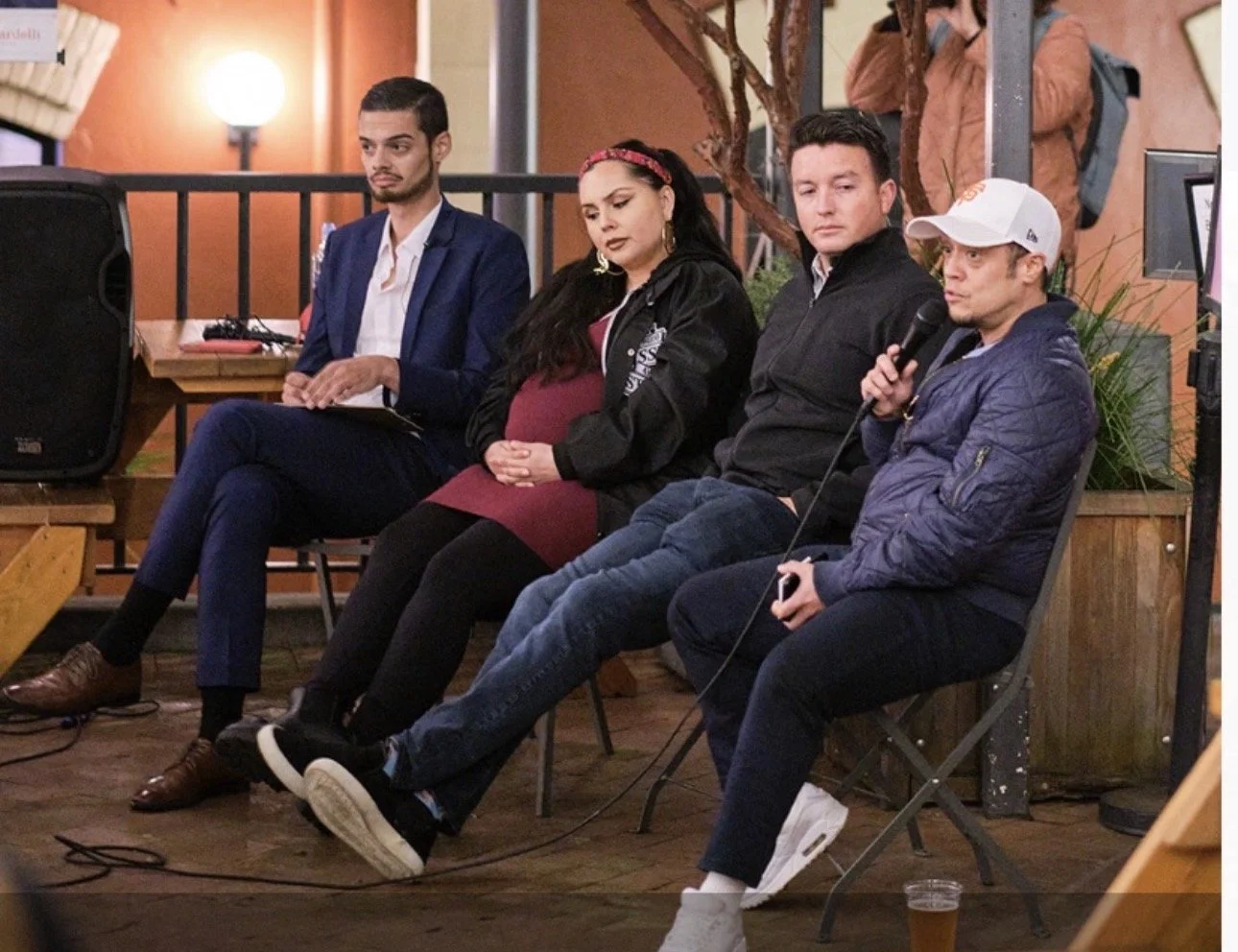
Carlo Gomez Arteaga, co-executive director of the Transgender District, telling us about the Compton’s Cafeteria Riot on San Francisco’s 175th Birthday (April 15, 2025)
Results: As soon as a week later, queer folks reported being able to go into whatever store they wanted to and try on whatever outfit suited them without fear of the police being called on them. Two years later, Stanford University opened what was only the second gender reassignment clinic in the country and the first one on the west coast. Six years later, Compton’s Cafeteria went out of business entirely.
3. San Francisco’s Stonewall (January 1, 1965)
At this point I’d like to ask a question that I ask on all the queer tours I lead: when have we ever gotten our rights by asking for them nicely? If you haven’t noticed the (many!) parallels between these uprisings yet, I’m sure you will very soon.
On New Year’s Eve 1964, the Council on Religion and the Homosexual (CRH), sponsored a Mardi-Gras themed fundraiser ball. The event had over 600 attendees and was promoted as being camera-free: patrons could feel at ease to dress however they’d like without risking their housing or careers.
While there were a handful of establishments at the time that tolerated queer patrons, it is worth noting that touching and dancing was illegal- further emphasizing the importance of private events such as the proposed ball.
And because the CRH had taken the time to meet with SFPD ahead of time, obtained the proper permits and a promise that there wouldn’t be any officers present that night, everyone was excited for a fun evening. Imagine their surprise when SFPD not only sent more than twenty officers to the ball, they also sent two photographers and an individual to record people coming in and out of the ball.
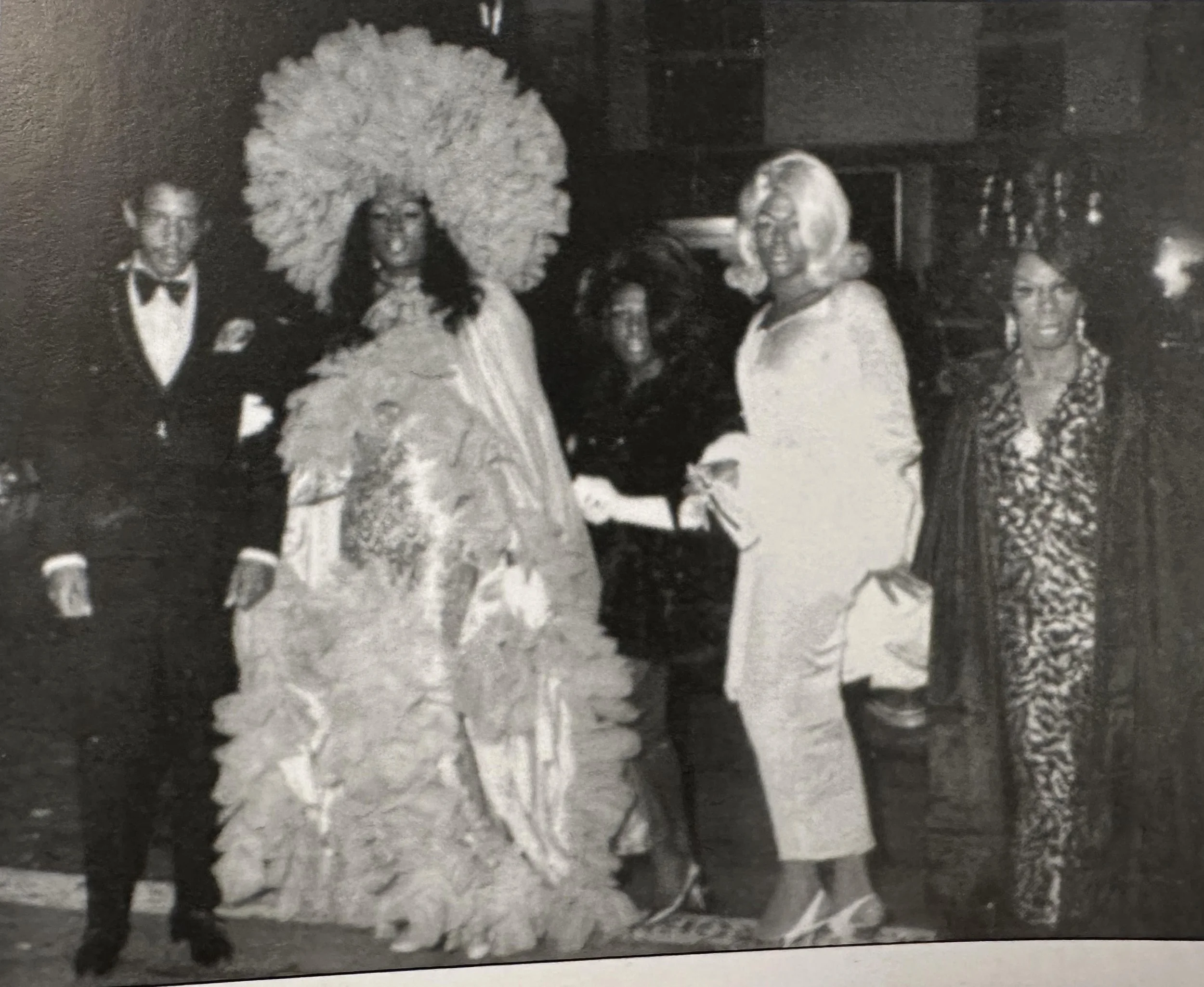
You can see the shock on the faces of the attendees as they arrived that evening. They had been assured no police or photographers would be present.
Eventually, a group of policemen forced their way into the venue, causing a huge panic. The straight allies present at the event helped the queer patrons escape out back exits, many going as far as to cover them with their jackets to keep their identities a secret. Some organizers captured photographs of the police’s behavior that evening, which proved instrumental in the aftermath of the attacks.
This event came to be known as San Francisco’s Stonewall.
Results: Several news television crews captured the brutalization by the police department, leading many outraged clergymen and other professionals to hold press conferences denouncing SFPD’s heavy handed tactics. This garnered national sympathy for the LGBTQ+ community and a unique, mutually beneficial relationship between them and parts of the religious establishment.
4. Raid at Chukker Club (February 12, 1965)
Chukker Club was located just down the street from Gene Compton’s Cafeteria, at 66 Turk St. On February 12, 1965, 56 patrons were arrested, including the twenty-six year old owner, Charles Lara, three minors, and four members of the US Armed Forces.
This event made headlines as one of the “biggest SF raid on homosexuals.”
Just a few years earlier, the Tavern Guild of San Francisco (TGSF) had been founded as the first gay business association in the United States. TGSF organized a phonebank that kept the member bars, liquor stores and wholesalers informed about upcoming police raids and maintained a fund for arrested and/or unemployed bartenders and other staff.
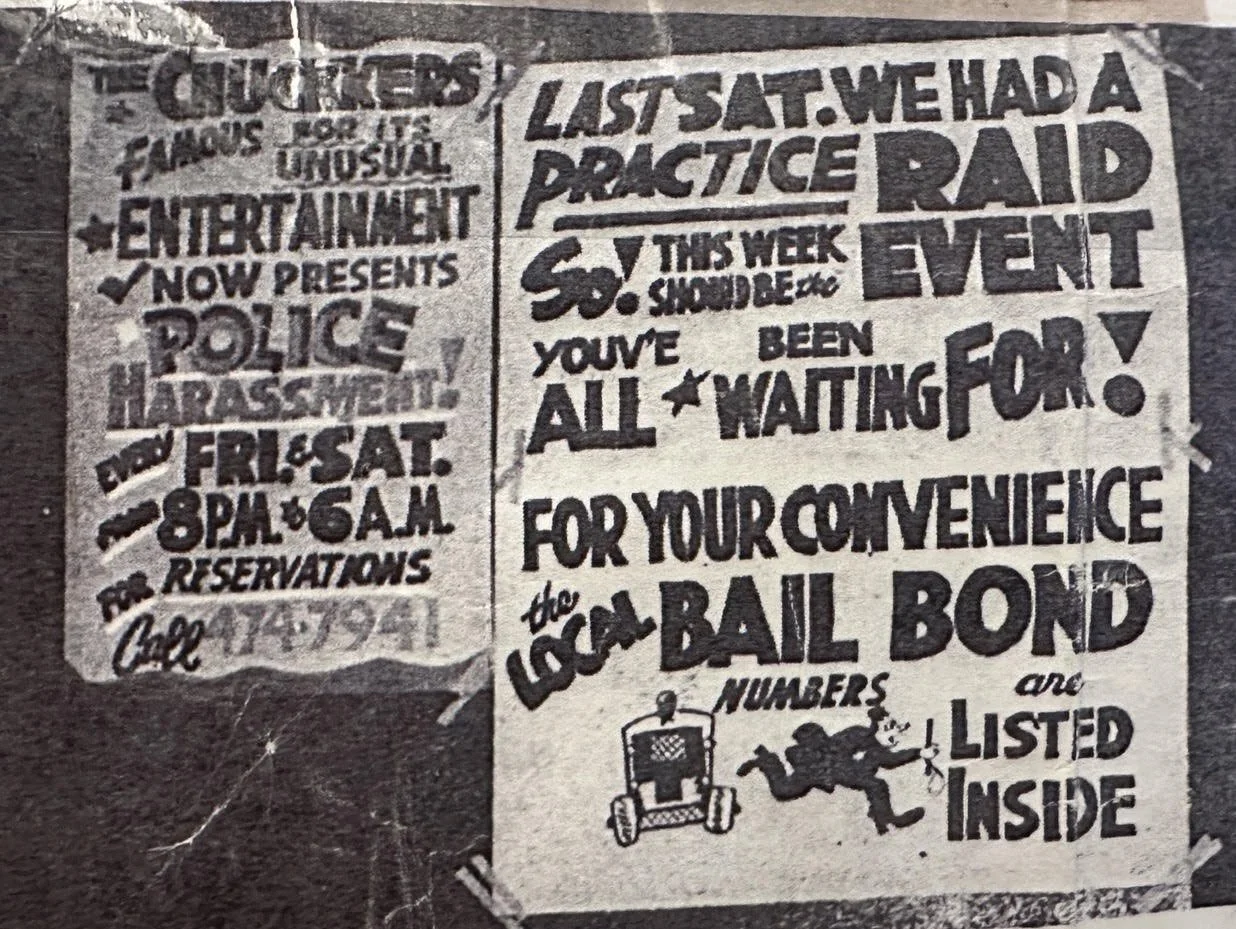
Charles Lara, owner of the Chukker Club, used humor to denounce the constant police raids of his establishment.
Results: The raid at Chukker Club (along with San Francisco’s Stonewall on NYE 1964, the riot at the Black Cat Cafe in Silverlake in 1965, and many, many other undocumented and under-documented riots and raids happening throughout the United States) contributed to sustained national focus and activism related to the rights of LGBTQ+ people, leading up to the Pride parades that took place across the country following the uprising at Stonewall in 1969.
Do we have time for one more? I might’ve saved the best for last…
5. Cooper’s Do-nuts Riot (1958 or 1959)
On a May evening in 1958 or 1959, LAPD did an ID check at Cooper’s Do-nuts, a 24 hour donut shop located between two gay bars, The Waldorf and Harold’s. Remember that under the anti-masquerading laws at the time, your gender presentation had to match your sex defined at birth.
The police tried to arrest two drag queens, two male sex workers, and another gay man who just happened to be hanging out that evening. Apparently one of five began to argue with the police about there not being enough room in the police car for all five of them and the chaos resulted in people coming out of Cooper’s and throwing coffee, donuts, wrappers, and all sorts of other trash, resulting in LAPD making none of the intended arrests and having to flee the scene. This caused a large group to assemble, with patrons coming out of the neighboring bars to join the melee.
It wasn’t long before the police returned with back up and closed off the block, before beating and arresting several people.
This was the first documented queer uprising in United States history.
Results: In 2020 LAPD issued a formal apology for their treatment of LGBTQ+ folks, including the sustained harassment of a lesbian Chicana activist named Nancy Valverde (her niece was present to accept the apology). The intersection in downtown Los Angeles at East 2nd and Main Streets (not where Cooper’s Do-nuts was located, but conveniently behind LAPD headquarters) was named Cooper Do-nuts/Nancy Valverde Square. This is one of the only (if not the only) apologies that an American police department has made to a queer community hurt by their actions.
***
Oh and by the way, they (the queers) were gathered at the Stonewall Inn that evening (June 27, 1969) for a very specific reason: earlier in the day was Judy Garland’s funeral. In other words, the police knew where they could target the gay community while they gathered to mourn the death of one of their biggest idols (The Wizard of Oz can be understood as a coming out story: Oz being the beautiful, colorful, gay world you enter after coming out, and “friend of Dorothy” being how gay men kept their sexuality a secret before the 1993 “Don’t Ask, Don’t Tell” US military policy). Some say it was a coincidence that Judy Garland’s funeral was the same day as the Stonewall riot.
I don’t think so.
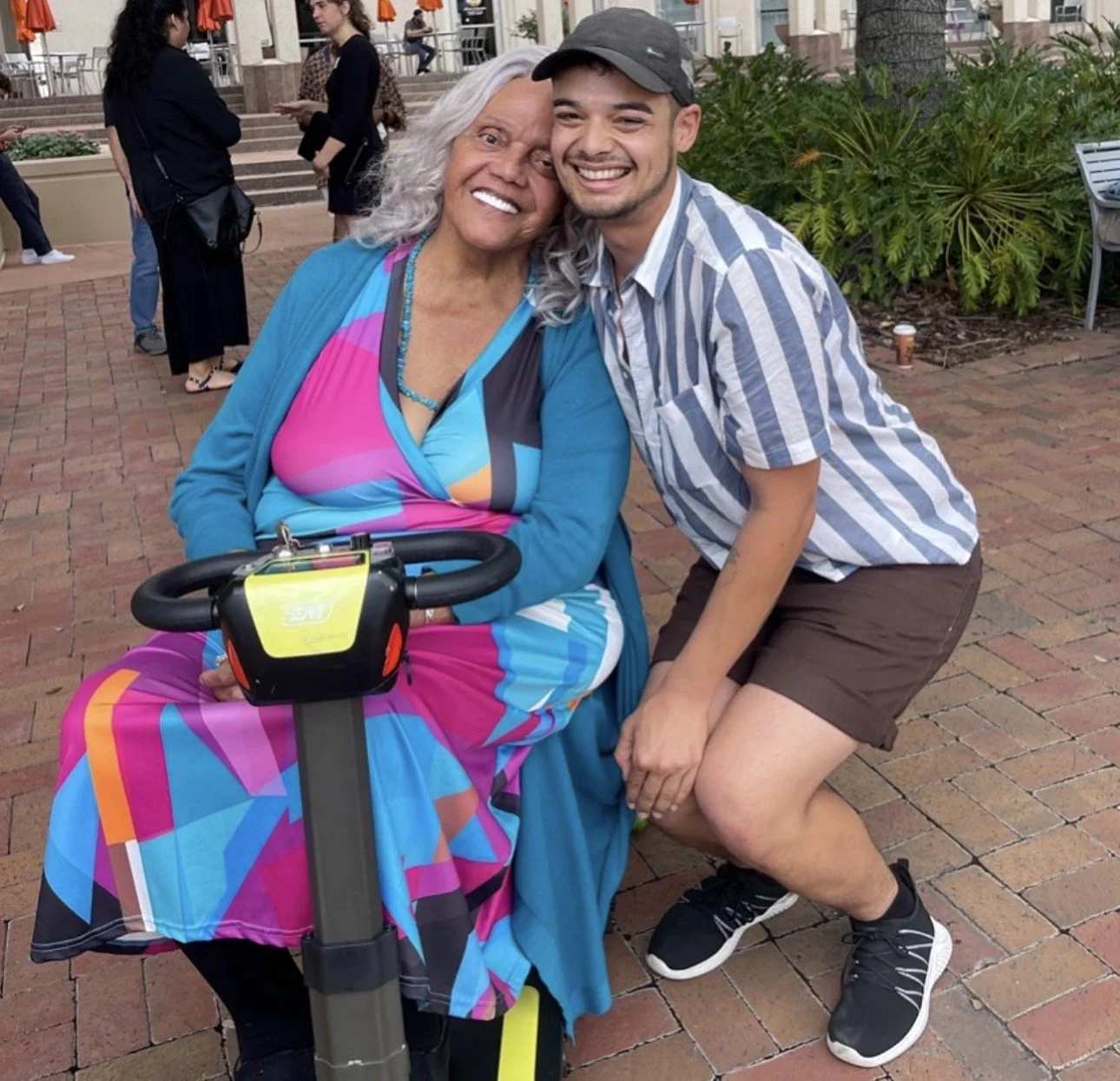
An incredible honor meeting the legendary Miss Major Griffith Gracy in Orlando, Florida
Pride wasn’t a parade; it was not a kiki, and it sure as hell wasn’t a bunch of rich Caucasian twinks dancing in the street. If you live your life as an openly queer person in the United States, know that you (WE) owe EVERYTHING to the people who participated in these uprisings.
And I firmly believe that under no circumstance should cops be at Pride.
No exceptions.
To say or think otherwise would be an adamant rejection and distortion of the fact that what we now refer to as Pride, was in fact, a series of riots largely led by transgender women of color to protest police brutality.
The best way to explore these pivotal moments in history is through a historic walking tour! Head on over here to find out more about California Queer Adventures